Made Act 1 of a narrative RPG on my own, by directing AI
- Role
- Creator: game design, narrative, art direction and tools
- Team
- Solo (Álvaro Garrido): Claude Code agents for the code and tools, AI tools for art, 3D and audio
- Scope
- Narrative 3D RPG · browser game (PlayCanvas, TypeScript) · in-engine tools
- Context
- My own game; Act 1 of five planned acts
- Act 1
playable internally, with 30 conversations; no public build yet
- 2
in-engine tools for my own hands-on work: a Level Studio and a Dialogue Studio
- 4:11
intro film, from a script file to painted panels, voice and score
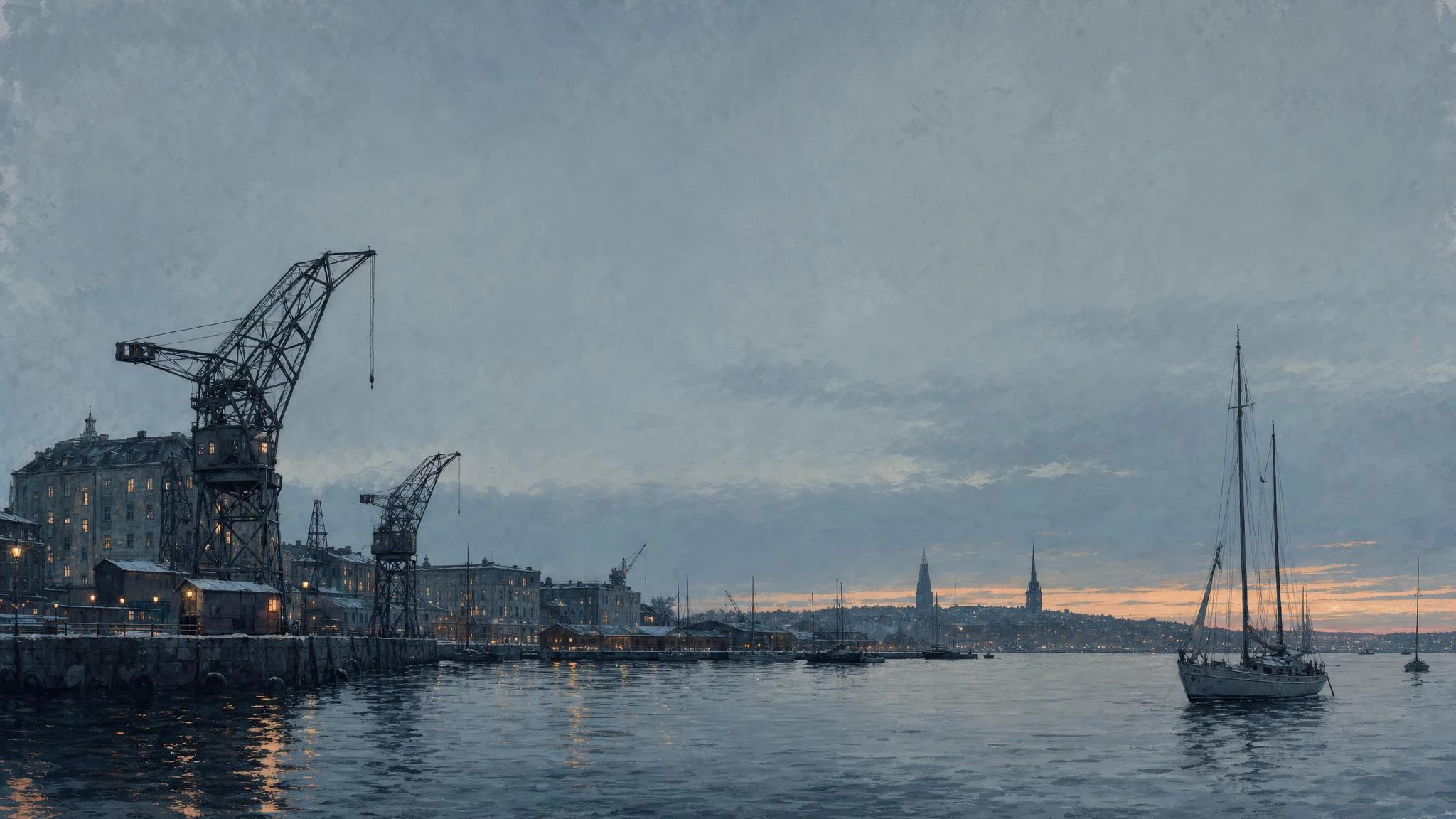
A melancholy narrative RPG set in Stockholm, 2064. Lou, 16, crosses an ocean looking for her little brother. It is not a game about saving the world: it is one person looking for one person.
Can one designer direct a whole production?
I wanted to see what one designer can make when AI does the volume and I keep the direction: the canon, the rules, the look and every final call. A game is a hard test, because code, 3D, art, voice, music and writing all have to agree.
Lou doesn't speak Swedish, so the player only half understands
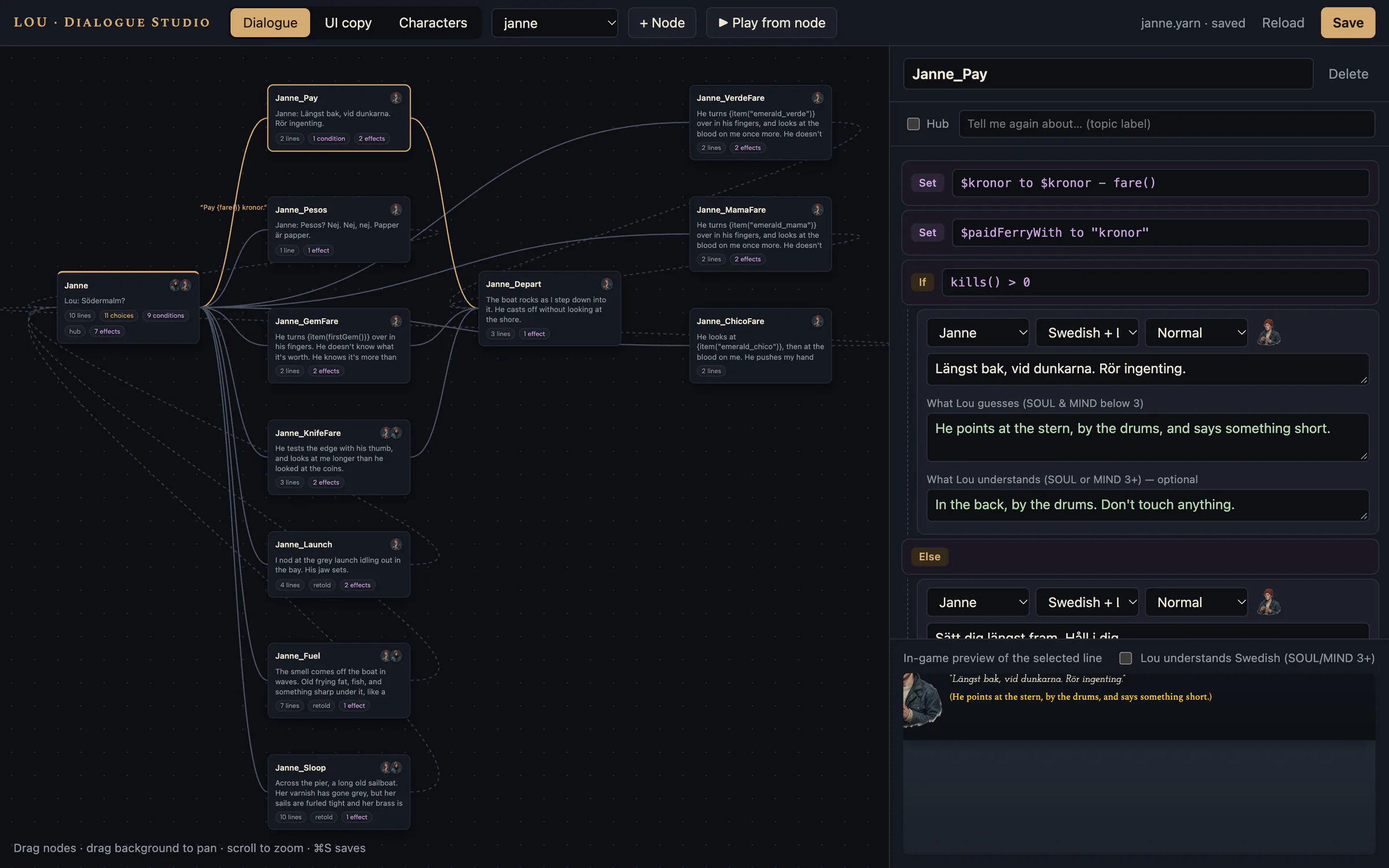
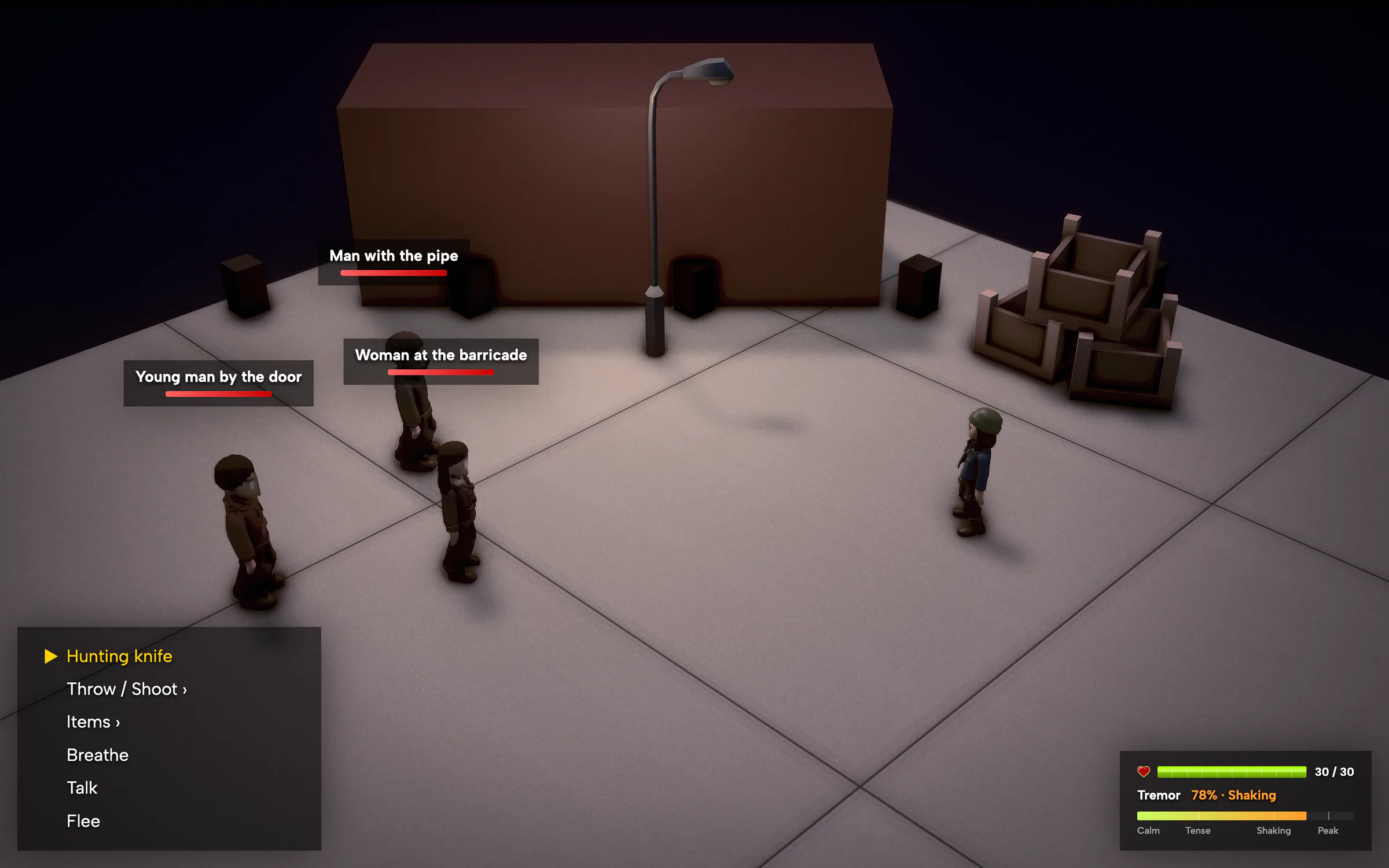
Many people in Act 1 speak only Swedish. Under each Swedish line the player sees only Lou's guess at what was said. When her stats are high enough, or she buys a dictionary, the guess becomes what was really said. In a fight, stress takes some of the words back.
Writing works the same way. Act 1 has 24 posters, notes and graffiti in Swedish, in 37 places across three maps. Until Lou can read Swedish, the writing shows blurred: she says only what she sees or guesses, then that she needs Swedish. A test checks that no written word leaks into her lines. Reading used to need the dictionary; I changed the rule, so high enough stats now teach her to read too.
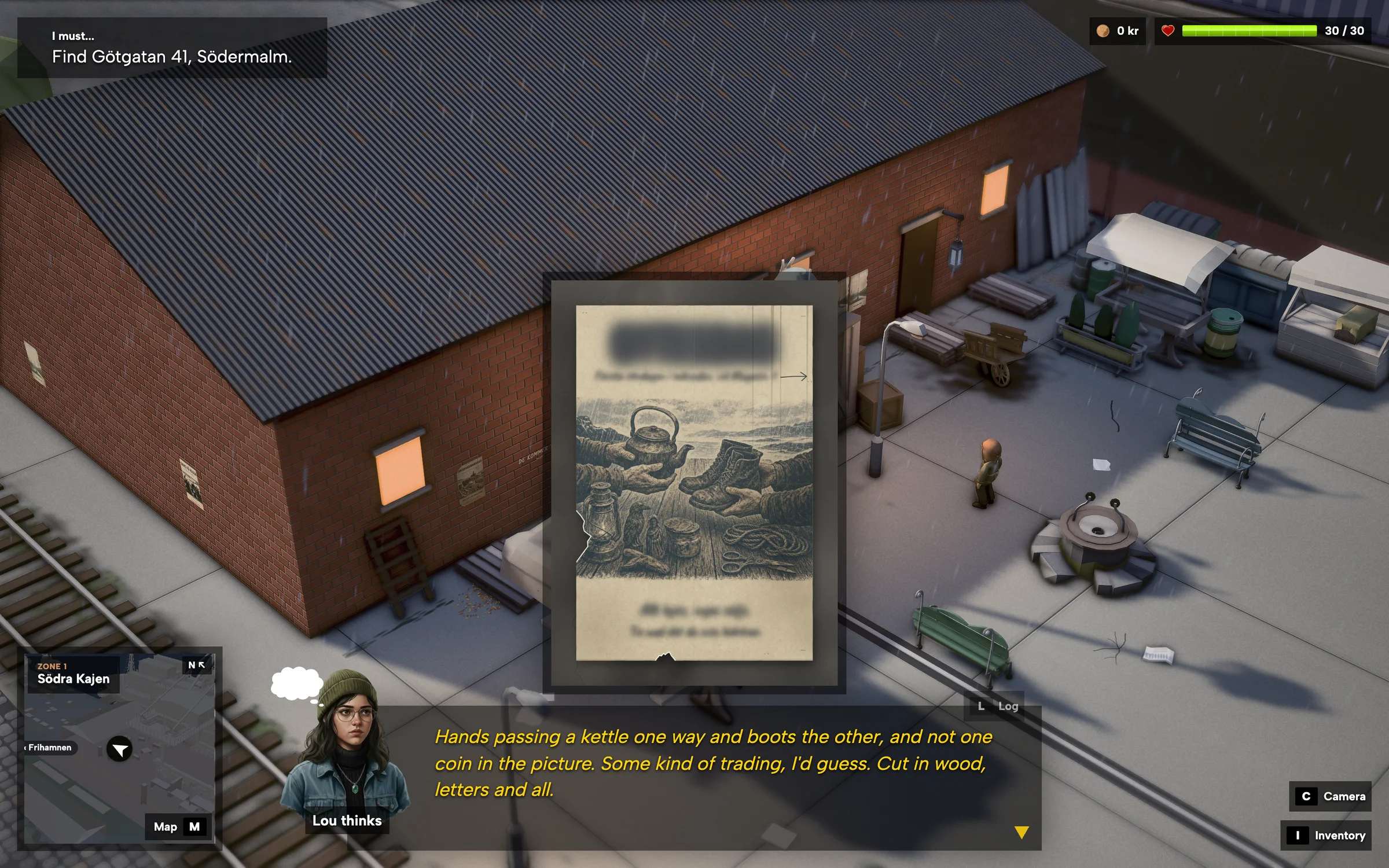
At one gate, the barrier is the puzzle. Vera speaks no English, and Lou has five tries to find the one line that gets an answer, in Vera's mix of Swedish and English, and opens the gate.
Players who read Swedish would lose that gap. For them, a setting called "Experience Swedish as Lou does" turns the words Lou doesn't know into ink blots of the same shape. The words she has heard stay sharp.
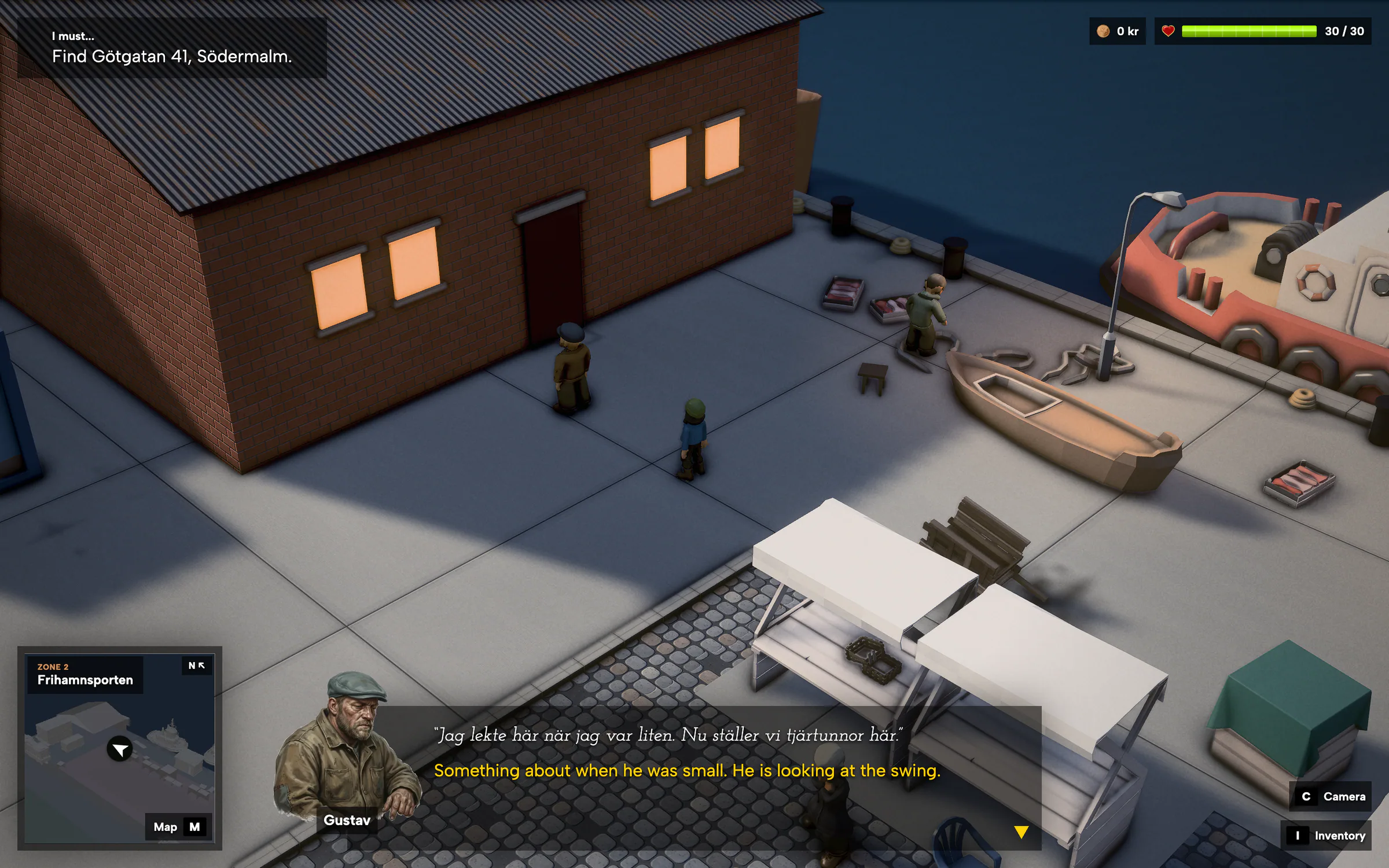
Two in-engine tools let me edit the game by hand
The Level Studio runs inside the game: I select and group props as in Figma, swap them from a palette of 2,237 models, paint the ground, set how each prop collides and snap wall art to walls. The Dialogue Studio edits the 30 Act 1 conversations, every UI line and the 90 hints on the loading screen, with a length guide and a warning when a placeholder goes missing.
This is where I do my own hands-on work. A map I edit is mine: agents may change it only with targeted edits, never by re-running a generator over it.
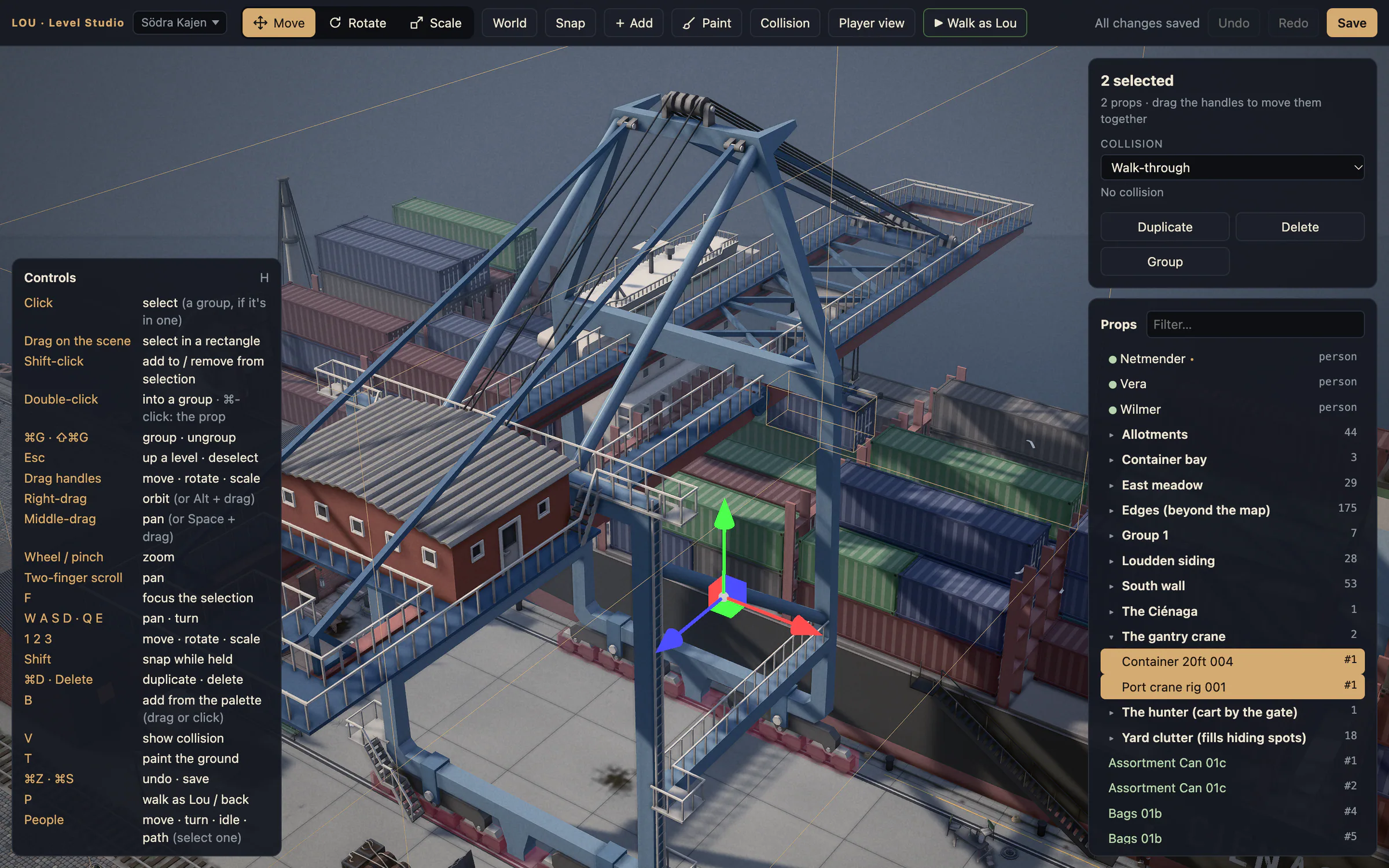
A clay diorama became Stockholm winter
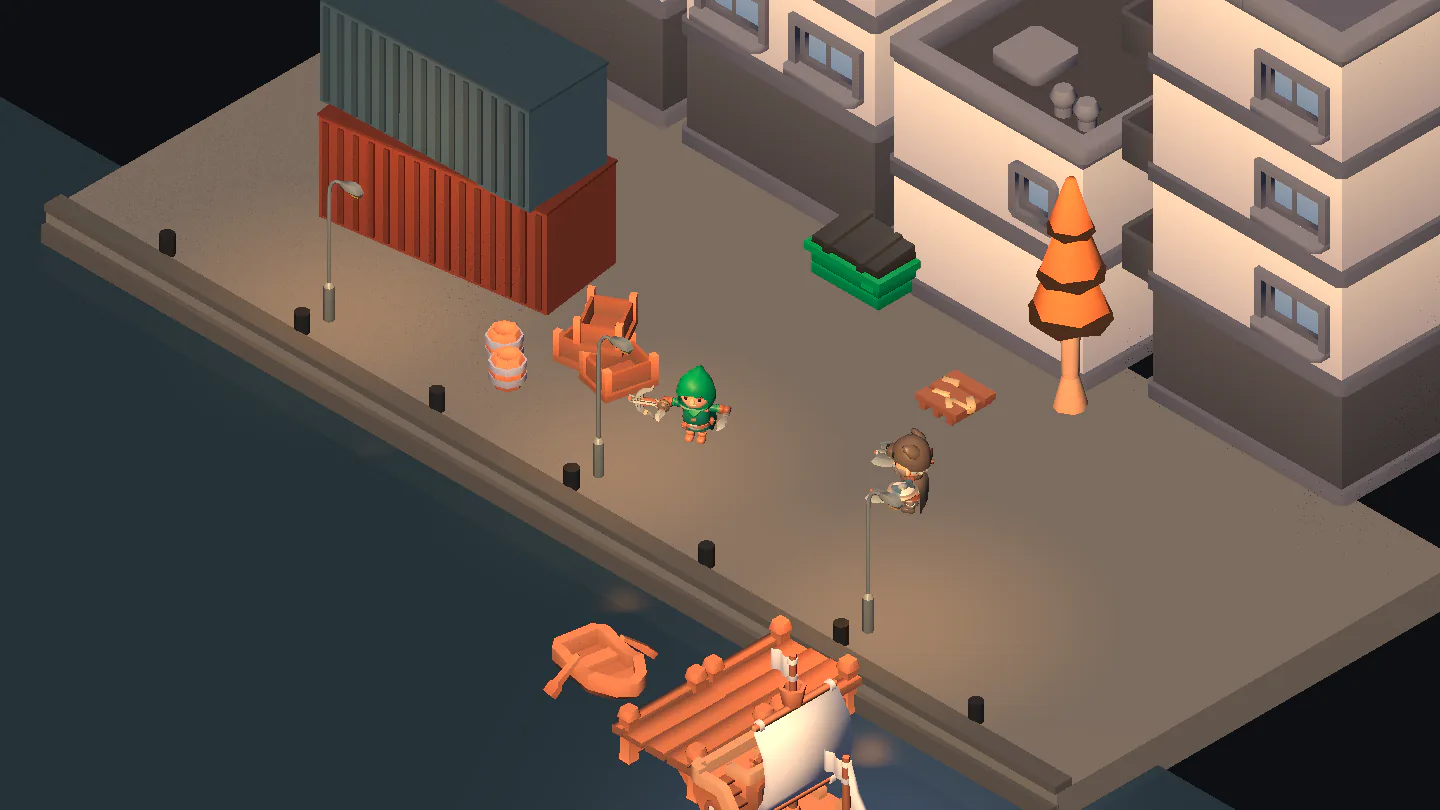
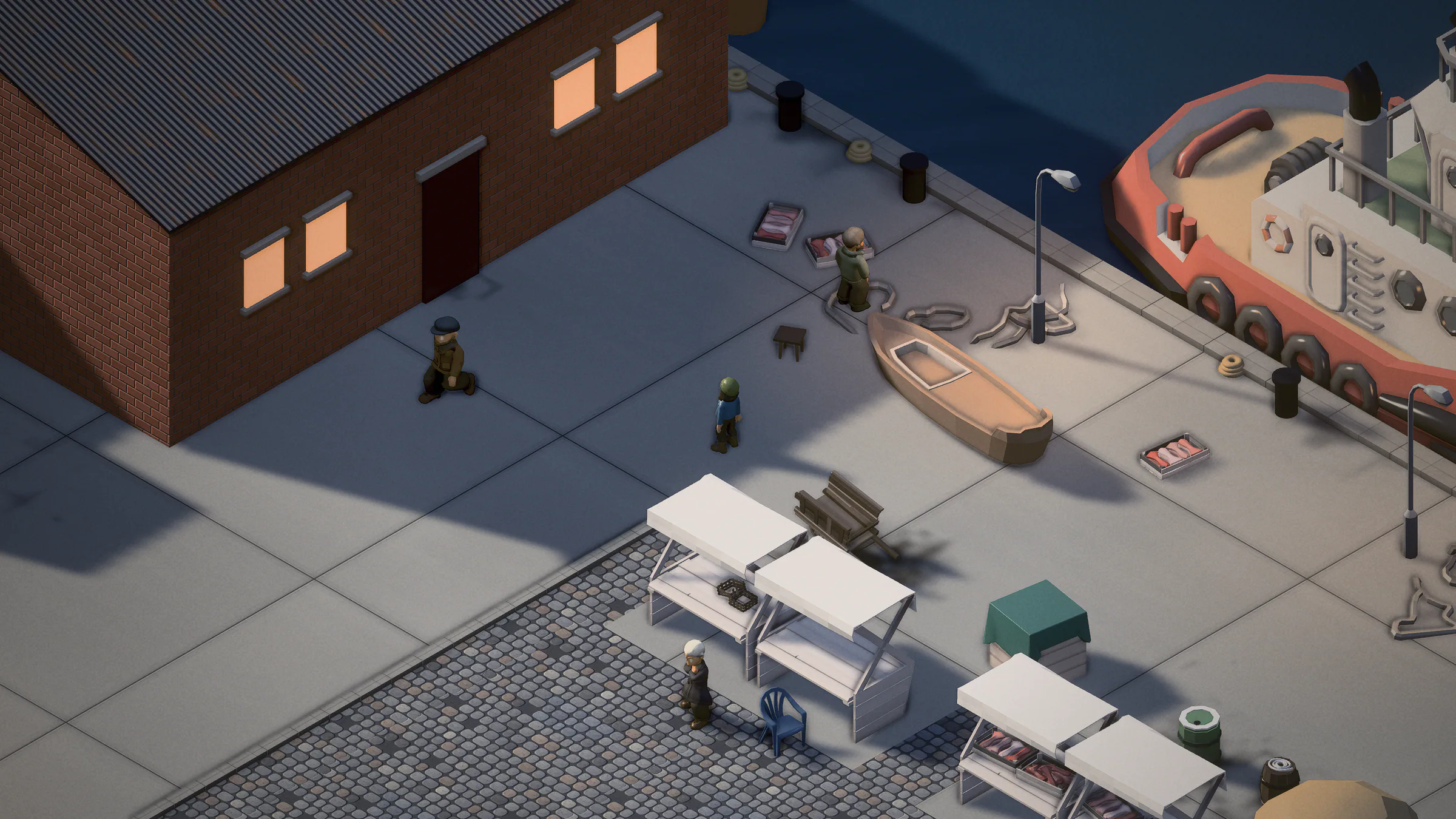
The first render, on 26 September, was a toy-like isometric quay of stock models, warm and saturated. Three days later the direction was set: a clay diorama with soft shadows, a tilt-shift band of focus and a desaturated Stockholm grade. The next day I picked a low three-quarter camera over classic isometric.
On 6 October an agent tested the intro film's look in the game (a colder grade, a round vignette, light film wear) on a real GPU: no measurable cost on Medium and High. I took a lighter game strength, because at the film's own a night interior went almost black and Lou disappeared. Flicker stays off: over hours it becomes a comfort problem. The interface stays outside the effect.
A kit, not a character creator, dresses the background cast
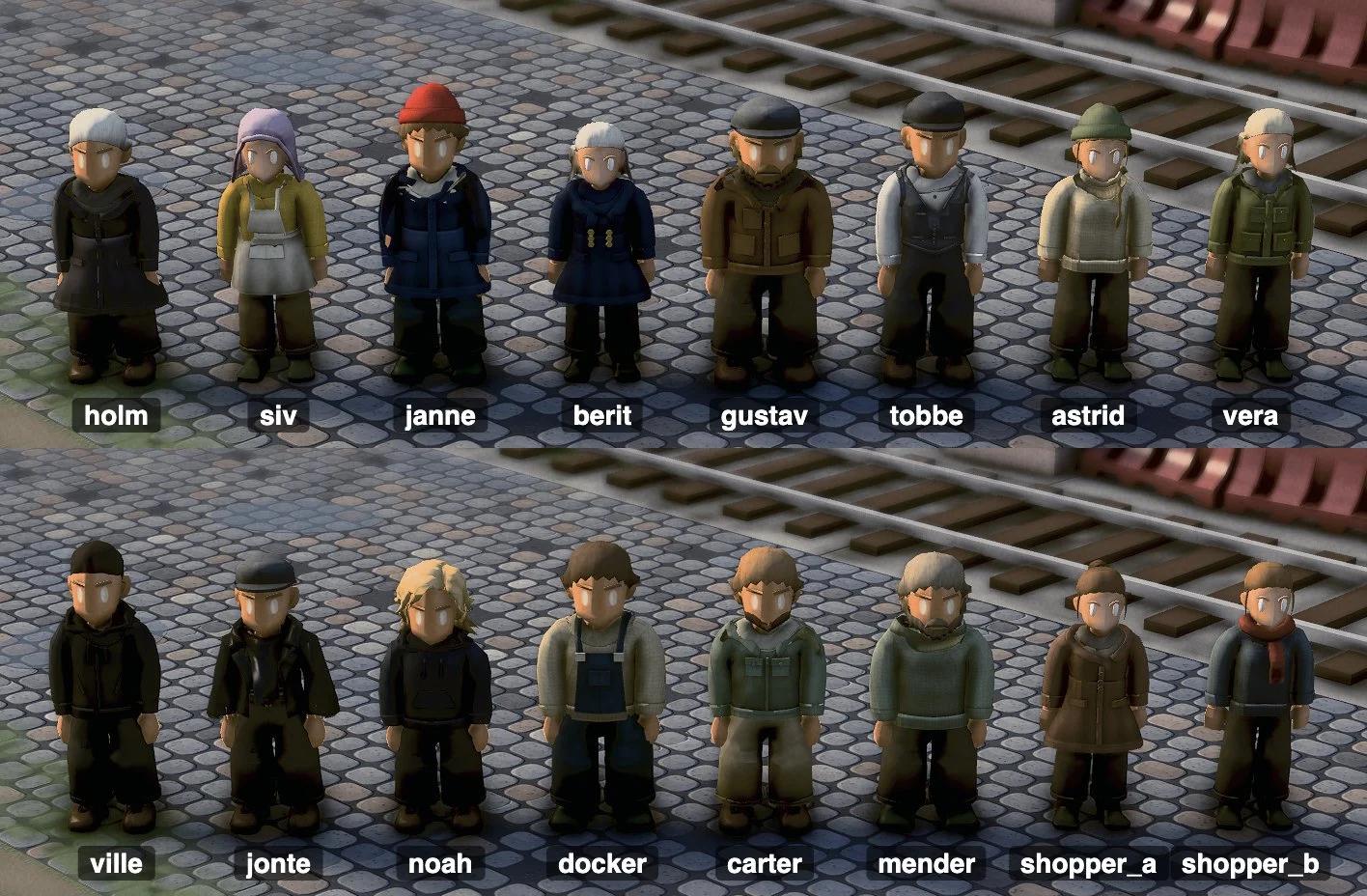
Background people come from a kit: two base bodies on Lou's skeleton, so every animation plays on everyone. Tripo outfits are split into pieces, and plain garments, hair and beards are generated from the body, so they fit by construction. A recipe picks a body, parts, tints, height and build, within 12,000 triangles; 35 recipes dress every background person, extra and fighter. A lineup renders everyone in the game's light; it caught a fisherman built on a woman's body.
AI does the volume; the canon, the rules and the bar stay mine
- What I directed: the premise and canon (only lore I approve is canon, and every canon question comes to me), the rules (the mechanics don't change unless I ask), the look, a budget per map (800 draws, 1.2 million triangles, 256 MB of textures) and cost rules for paid generations (a dry run, the credit cost, then my yes). In one canon review I went through all 98 lore entries the agents had proposed: I approved 92 and retired 6.
- What the AI did:
- Claude Code agents: the game code, both Studios, the Blender pipelines, the NPC kit generator and the tests; the in-game UI, read from my Figma file; lore and lines as proposals for me.
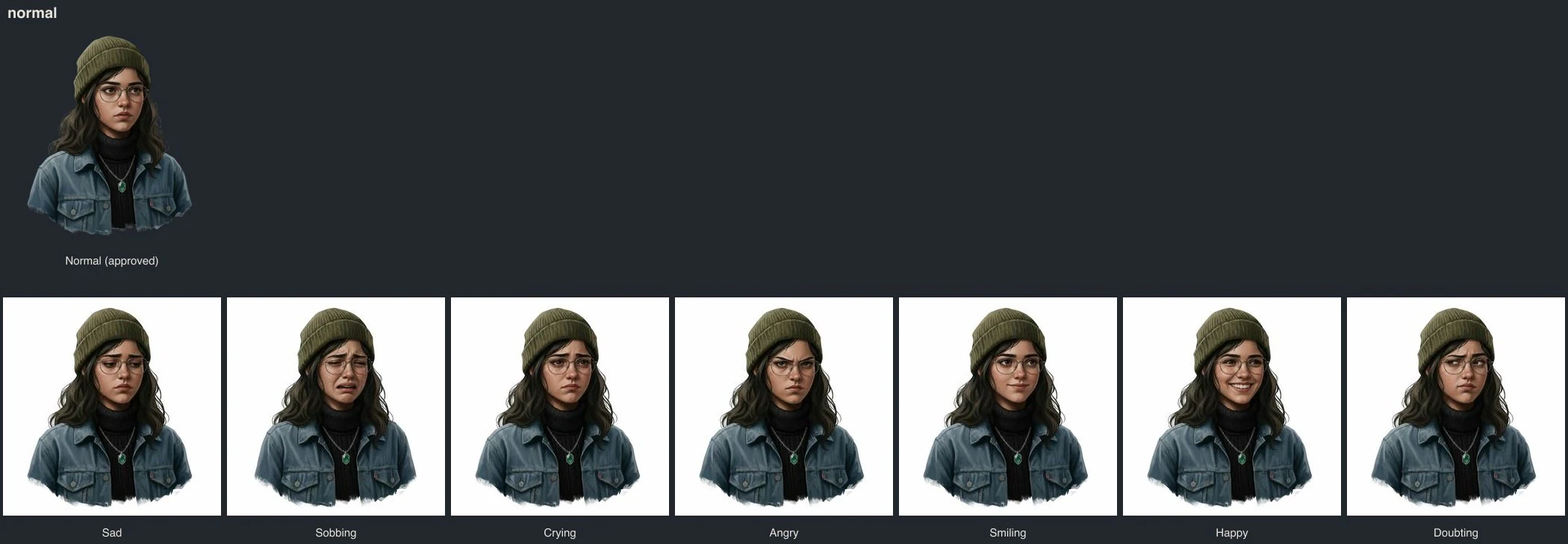
- Leonardo.ai (gpt-image-2): the intro film's panels, character reference sheets, dialogue portraits, 7 moods for each of 8 characters and the art for the Swedish posters.
- Gemini (2.5 Flash Image) and a GPT image model: early concept edits of Lou, T-pose sheets and some portrait drafts.
- Tripo3D: the 3D models of Lou and Hanna, and the bodies and outfits of the NPC kit.
- ElevenLabs: Lou's narration voice, her footsteps and breath, the film's score and sound effects, the title theme, a music loop per map, and greetings in designed NPC voices.
- Not AI: the world's models come from CC0 kits (Quaternius, Kenney, KayKit) and bought packs (iThappy Port, Harboria, polyperfect animals and others).
- How I checked it: 214 automated tests (rules, dialogue, every fight), a balance simulator agents may never edit, a performance check per map, a lore checker, and playing it. I review every generated image before it goes in. A dialogue pass by five agents, with about 7% fewer words, waits on its own branch until I've played it.
- What I rejected: the first mood portraits, made with nano-banana-2. I rejected that model on quality and chose to pay more rather than lower the bar: all 56 moods were made again with gpt-image-2 at high quality. The first set was weak overall: off the style of the film and the reference sheets, and with moods that were hard to tell apart. I believe in minimum lovable products, and that set wasn't lovable.
Act 1 is playable internally; there is no public build yet
Act 1, the harbor of Frihamnen, runs from Lou's arrival to the end of the act: 30 conversations, encounters she can avoid, talk down or fight, a fight layer driven by her stress, hunting and a small economy. So far I'm the only playtester. A password-protected web build is ready for the first outside playtests. Four more acts are planned. Nothing is public yet.
What directing agents taught me about leading people
An agent does what the brief says, so the brief has to say who decides what. The rules above are that list: what an agent may decide alone, and what comes to me with the evidence. What an agent invents goes into a log I approve or reject, and each session ends with a handoff note for the next. I ran the same rules on client work, in my PLL prototype. I want the same with a design team: decision rights in writing, and a handoff that doesn't need a meeting.