Turned soil-sensor data into an irrigation schedule farmers could act on
- Role
- UX Researcher and Product Designer
- Team
- The agriculture team at Telefónica R&D, with its data scientists
- Scope
- Agtech · IoT · Android app · UX research, interaction and UI design, branding
- Context
- OptimalCrop, an IoT irrigation platform from Telefónica's R&D lab in Chile
- Piloted
MVP piloted with farmers, then released
- Sold
company context: the product was later sold to a private company
Irrigation wasted water and energy, or left crops short
Many irrigation systems don't use water efficiently. They use more water than the crop needs, and more energy to pump it, or not enough to keep the crop healthy. At Telefónica R&D in Chile, the agriculture team built OptimalCrop to help farmers know when and how to irrigate, and to save water and electricity without losing harvest or quality.
Sensors measure the humidity underground. The team's data scientists developed a patented algorithm that predicts how that humidity will behave. The design question was how a farmer comes to trust that prediction enough to act on it.
I turned the prediction into a schedule on the farmer's phone
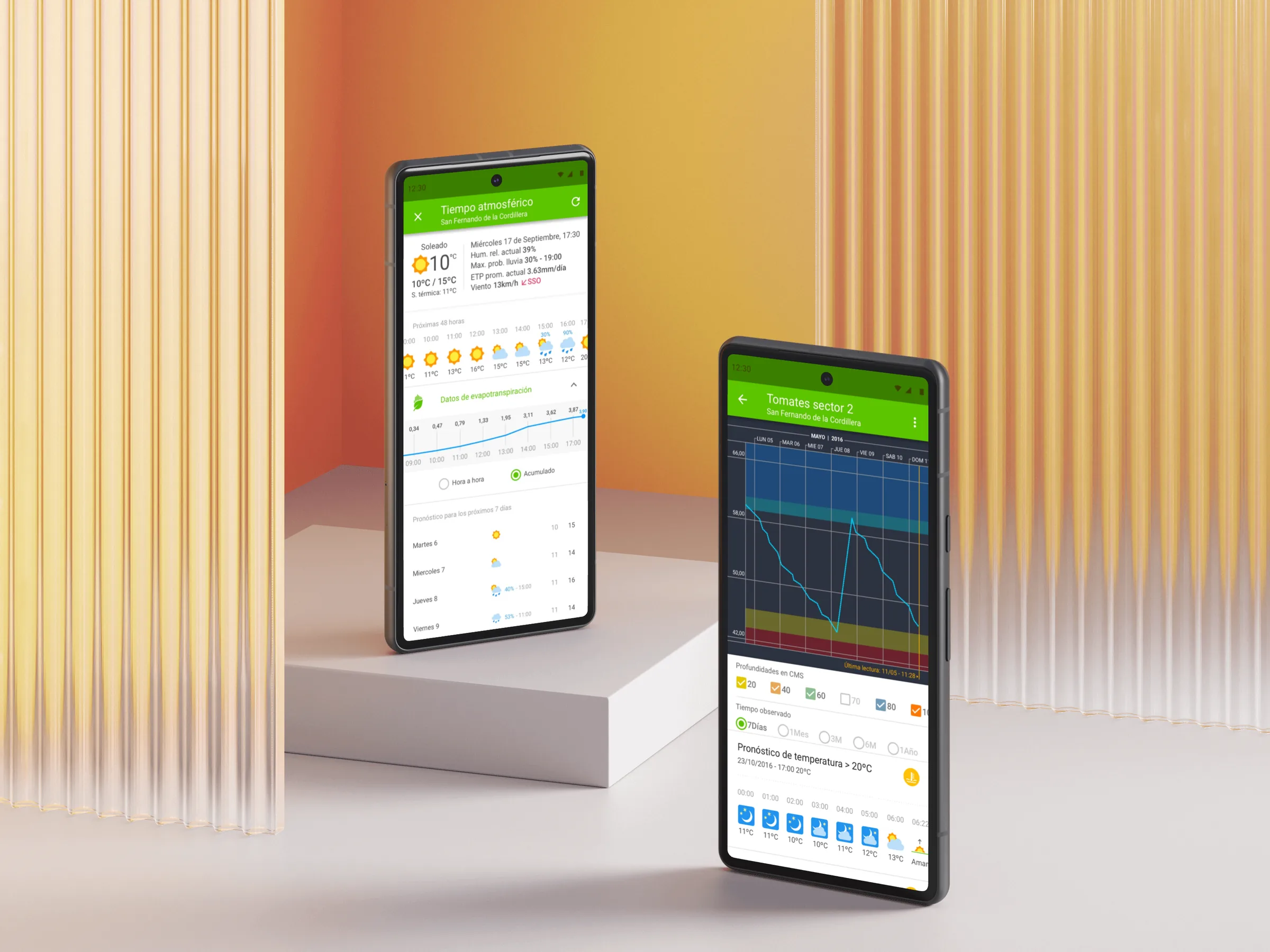
I did all the UX research, interaction and UI design for the Android app, and designed its brand. Over two years I made 7 visits to berry and citrus farms in the south of Chile, sometimes alone and sometimes with my team and stakeholders from the business: about 12 industrial farms in all. Even professional growers with years of experience hesitated to trust a system other than their own Excel spreadsheets and manual calculations. That insight led us to a detailed mode in the app, where specialists can check how the algorithm reached its recommendation. The app turns the prediction into an optimized irrigation schedule that takes the relevant variables into account. Farmers see the status of their fields on a map, check soil humidity at different depths on a curve, set alerts on weather and sensor ranges, and read a forecast built from their own data sources or from third parties.
I also led UX strategy for the agriculture team and set up its research workflow.
Piloted with farmers, then sold
OptimalCrop was piloted as an MVP with farmers. The product was later released and sold to a private company.
Credits: the agriculture team at Telefónica R&D Chile and its data scientists.